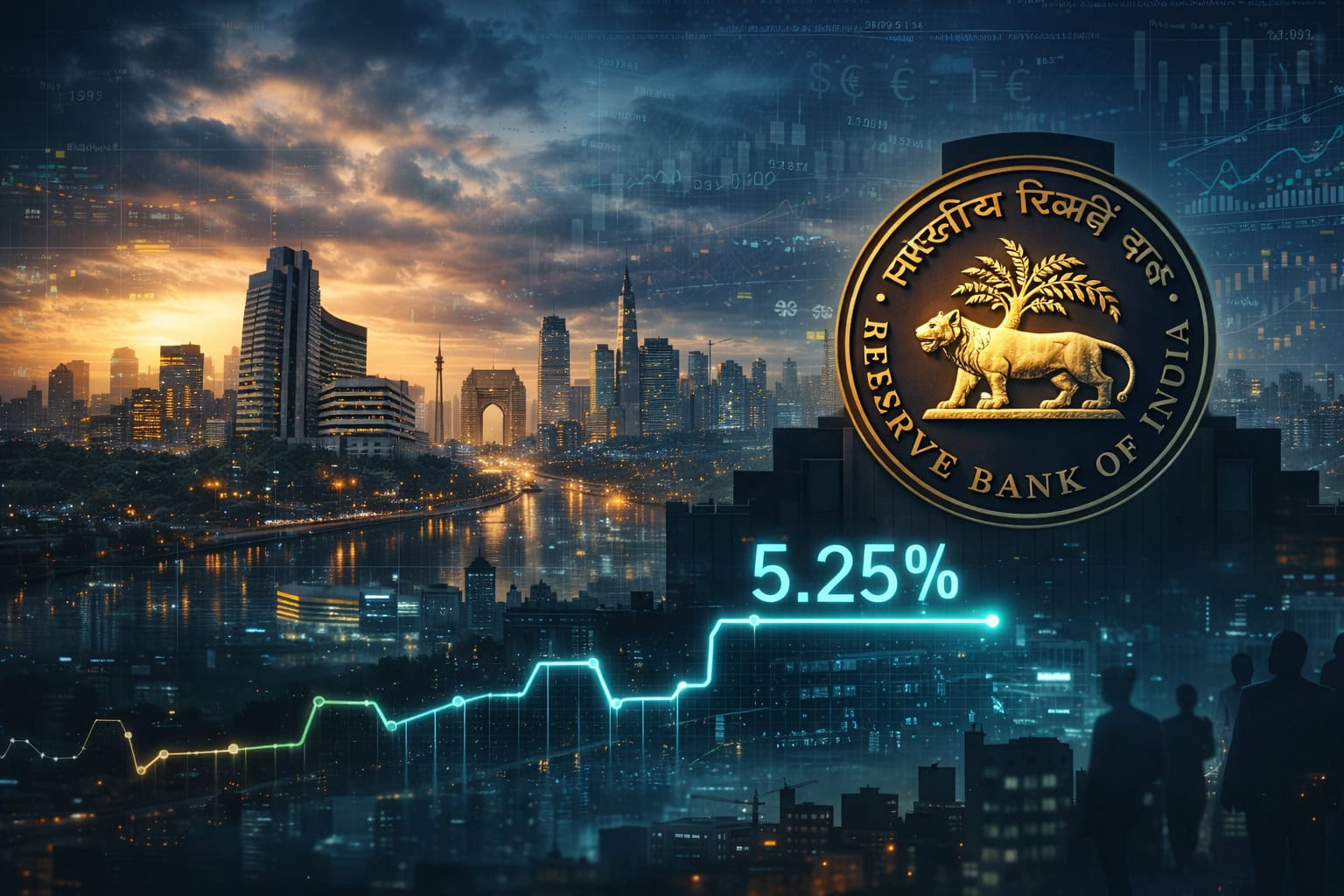

The Reserve Bank of India (RBI) today (6-Feb-2026) announced its decision to keep the repo rate steady at 5.25%, maintaining a neutral monetary policy stance. This move has caught the attention of economists, investors, and everyday citizens alike. Why is the RBI choosing caution over celebration despite encouraging inflation and growth numbers? What does this mean for you, your wallet, and the broader Indian economy? Let’s break down the key points in simple terms and understand the broader impact.
The Most Pressing Issue: Inflation Control vs Growth
India’s inflation has been unusually low recently-a positive sign in many ways. Inflation refers to the rise in prices of goods and services over time, which affects how much your money can buy. The RBI’s main goal is to keep inflation in check while supporting economic growth. Right now, inflation is soft, meaning prices aren’t rising too fast, which is great news.
But here’s the catch: low inflation is an achievement that needs protection. If the RBI reacts too quickly by cutting rates further or changing its stance prematurely, it could risk inflation rising again. So, the bank is signaling patience and caution rather than rushing to celebrate or relax policy.
What Exactly Did the RBI Decide?
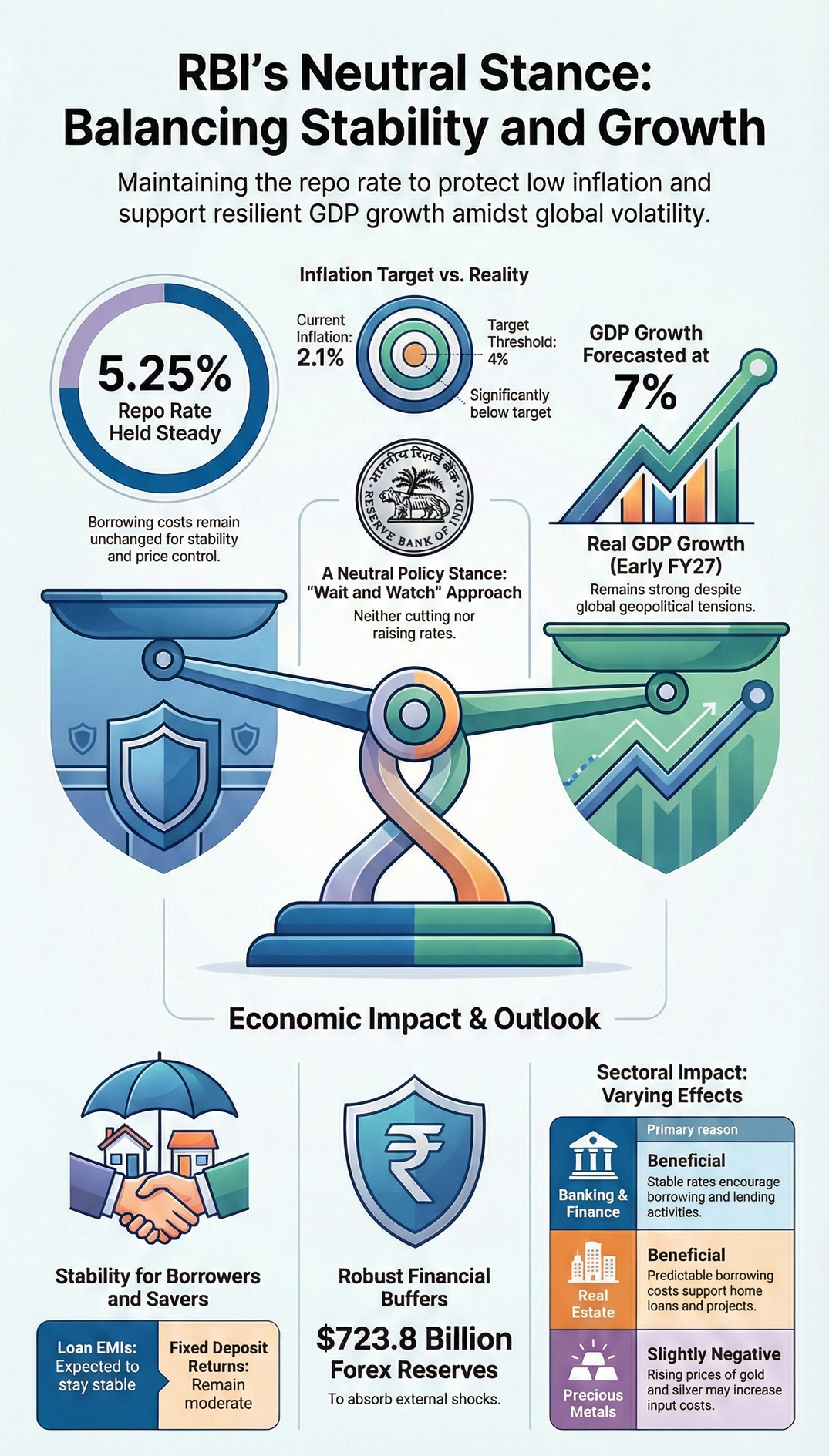
- Repo Rate Held at 5.25%: The repo rate is the interest rate at which banks borrow money from the RBI. Keeping it unchanged means borrowing costs remain stable.
- Neutral Policy Stance: The RBI is neither actively easing (cutting rates) nor tightening (raising rates). It’s waiting to see how the economy unfolds.
- Focus on Credibility: Rather than jumping into action based on optimistic numbers, the RBI prefers to maintain trust that it will keep inflation under control.
Why Is Inflation So Important?
Inflation affects everyone’s daily life—affecting prices of food, fuel, housing, and more. Too much inflation erodes purchasing power and can hurt poor and middle-class families the most. On the other hand, very low inflation or deflation (falling prices) can slow economic growth and lead to job losses.
The RBI projects inflation for the current financial year at just 2.1%, which is well below its target range of 4%. However, it expects a slight rise in the first half of next year to around 4%, mainly due to changes in precious metal prices like gold and silver, not because of core inflation pressures.
Growth Projections: The Bright Side
Despite global uncertainties like geopolitical tensions and commodity price swings, India’s economy is showing resilience:
- GDP Growth Revised Upwards: Real GDP growth for the first two quarters of FY27 is now forecasted at 6.9% and 7%, respectively.
- Domestic Economy Absorbing Global Shocks: This shows India’s economy is coping well with external pressures such as supply chain disruptions and international market volatility.
This balanced outlook gives the RBI confidence but also reason to remain watchful.
How Past Rate Cuts Are Helping
The RBI has already cut rates by 125 basis points earlier to stimulate growth. These cuts are working their way through the system:
- Bank lending rates have fallen by about 105 basis points.
- Deposit rates have also adjusted downwards.
- System liquidity remains abundant with a surplus of Rs 2 lakh crore.
- Forex reserves are strong at $723.8 billion.
These factors mean that financial conditions remain supportive without needing further rate changes right now.
Why Neutral Stance Matters Now
Choosing a neutral stance means:
- The RBI is carefully monitoring economic data before making any decisions.
- It preserves flexibility to act if inflation spikes or growth slows unexpectedly.
- It signals to markets that policy will be data-driven, not based on speculation or sentiment.
- It avoids unnecessary shocks to borrowing costs or investor confidence.
Given global market volatility and unpredictable commodity prices, this cautious approach aims to maintain stability.
What Does This Mean for You?
- Borrowers: Interest rates on loans like home or car loans may stay stable for now, which is good news if you’re planning big purchases.
- Savers: Deposit rates might not rise quickly, so returns on fixed deposits remain moderate.
- Consumers: Stable inflation means prices won’t suddenly jump, helping with household budgeting.
- Businesses: Predictable borrowing costs and stable demand encourage investment and hiring.
Sector-wise Impact Table
| Sector | Impact | Reasoning |
|---|---|---|
| Banking & Finance | Beneficial | Stable interest rates encourage borrowing and lending activities. |
| Real Estate | Beneficial | Lower borrowing costs support home loans and new projects. |
| Consumer Goods | Neutral | Stable inflation helps maintain steady demand but no immediate boost. |
| Precious Metals | Slightly Negative | Rise in precious metal prices may increase input costs for jewelers and related sectors. |
| IT & Technology | Neutral | Growth projections support stable demand; interest rates less crucial here. |
| Agriculture | Mixed | Inflation control helps consumers but commodity price volatility remains a risk. |
| Manufacturing | Beneficial | Growth outlook supports investment; stable borrowing costs reduce financial stress. |
| Energy & Commodities | Uncertain | Global volatility in commodity prices poses risks despite domestic stability. |
Frequently Asked Questions (FAQs)
The RBI believes that maintaining price stability is crucial after achieving low inflation. Cutting rates too soon could risk reigniting inflation pressure. Past rate cuts are still influencing the economy, so the bank prefers to wait and monitor incoming data before taking more action.
A neutral stance means the central bank is neither pushing for easier monetary conditions (rate cuts) nor tightening them (rate hikes). It reflects a “wait and watch” approach where future decisions depend on how economic indicators like inflation and growth evolve.
Since the repo rate remains unchanged, banks are less likely to change lending rates immediately. If you have an existing loan with a floating interest rate linked to repo rate or benchmark rates, your EMIs should stay stable for now, providing predictability in your repayments.
The RBI’s cautious yet confident approach shows its commitment to protecting India’s economic stability while encouraging growth without risking overheating or price rises. For individuals and businesses alike, understanding this balance helps navigate financial decisions with greater clarity.


 By
By